Boaz: A DIY 3D Printer, Built Twice
Schedule



Abhishal Kochhal
Abhishal Kochhal is a senior at Leland High School in San Jose. He has designed and sold 3D-printed drone parts and printer components since 2022 as MRCAT-51 Drone Parts, builds competition robots with FRC team 604, flies as a certified drone pilot, and shows work at local maker faires. Boaz is his own machine, built twice: once the way the hobby builds printers, once the way a machine shop builds a fixture. He wrote up both builds, and the failures in between, in a 200-page book and a research paper. He is looking for an internship in 3D printing.
More Maker Info
More Event Info
More Project Info
https://www.linkedin.com/in/abhishal
What inspired you to make this project?
I built my first 3D printer the way the hobby builds them: printed brackets, idlers on M5 screws, rails lined up by eye. It looked like the CAD render and printed worse than a $300 machine from a factory. I did not want to accept that a year of building had to lose to a box off a shelf, so I went looking for how machine shops get precision on a budget. The answers were decades old: stiff frames, dowel pins in reamed holes, kinematic couplings, and measuring as you build instead of after. Boaz is what happened when I rebuilt the same printer using them.
What are some of the challenges you have encountered and how did you address them?
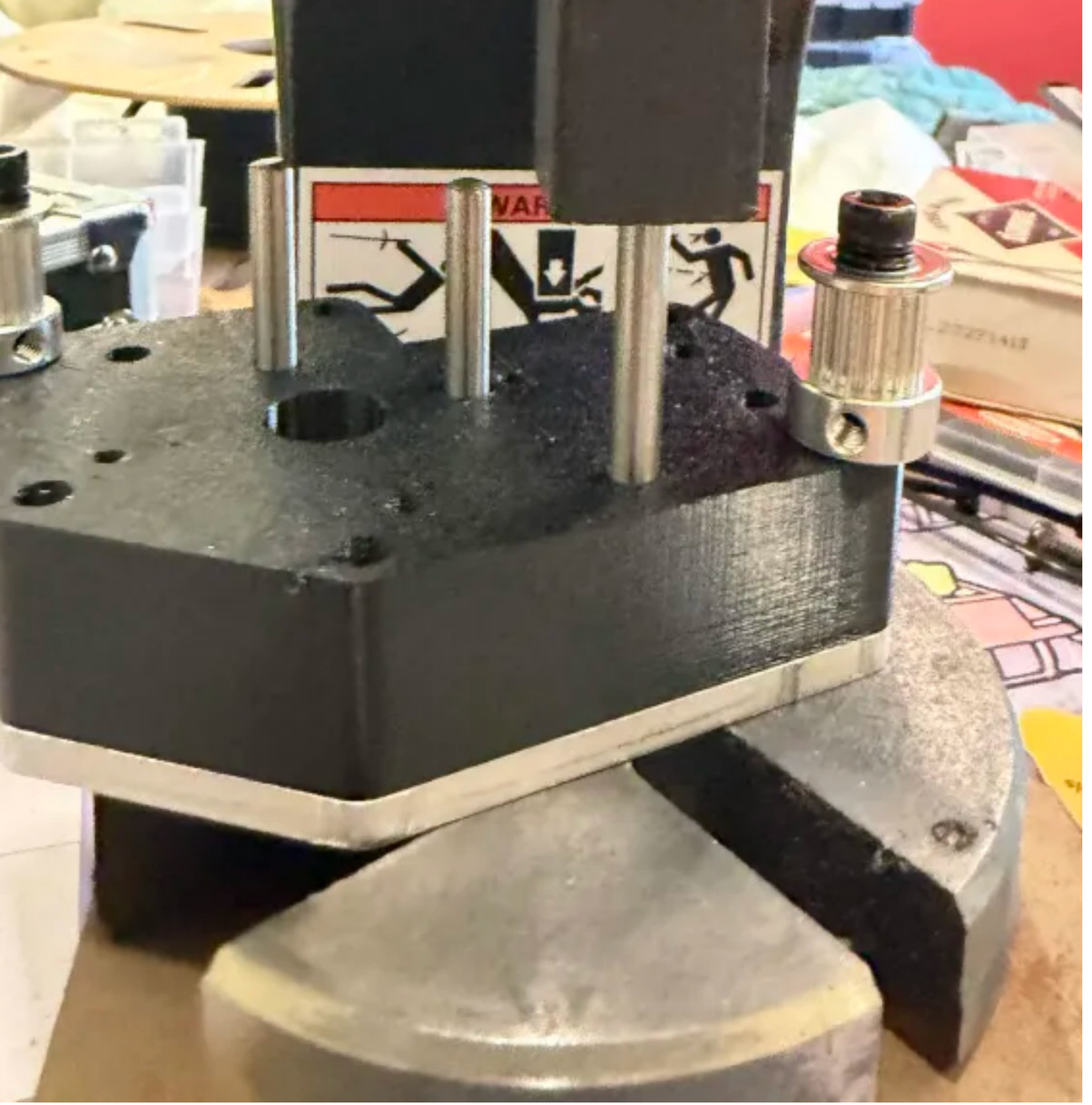
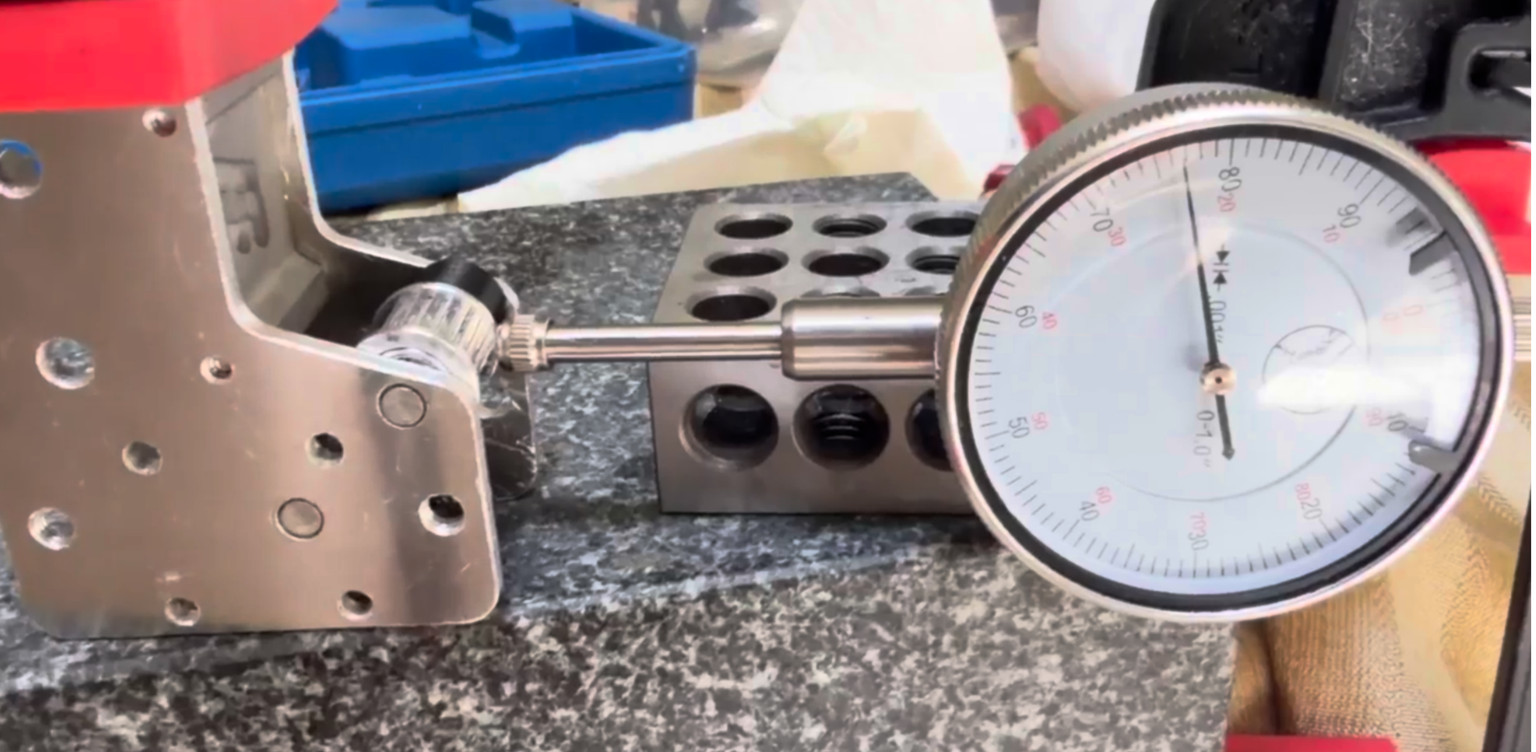
Most of them were things I did to myself. I reamed pin holes oversize, so pins that should have been press fits slid in by hand; the fix was a 4.95 mm reamer, a micrometer, and a dial indicator on granite to prove every idler ran true. The PCB heatbed warped 1.6 mm and no software mesh could hide it; a cast tooling plate on three balls fixed it, and an eddy probe made first layers hands-off. I tensioned belts one at a time and racked the gantry square out of true; now both go on together and a printed calibration part checks the result. The rebuild met seven of eight targets I set before starting. The eighth, acceleration on the Y axis, is still open, and I say so.